Exploring new challenges in the workplace: The win-win of including trans workers in organizations
Maria Ribas
University of Barcelona
Patricia Elgoibar
University of Barcelona
Abstract. Despite growing efforts around diversity and inclusion, transgender individuals in the workforce still face barriers to fully integrating in the workplace (Corlett et al., 2023a). This leads to a problem of ongoing discrimination in society and in modern workplaces, where organizations and their leadership play a crucial role. With the aim of giving visibility to the barriers faced by transgender workers, and showing strategies to promote inclusion, we explore the social and economic benefits of including trans individuals in organizations. With this objective, we conducted a scoping review of the existing literature from 2014 to 2024. After the analysis, the findings reveal that, while transgender individuals have gained visibility in society, they still face discrimination, which negatively affects their well-being. However, the analysis concludes that organizations with inclusive policies as well as trans workers who perceive having supportive colleagues are key mechanisms for reducing discrimination towards trans workers. At the economic level, the implementation of inclusive policies fosters financial performance, greater innovation, and increased market value. Theoretical and practical implications are discussed.
Keywords: Transgender workers; inclusion; social factors; economic factors; discrimination; diversity; scoping review.
Explorando nuevos retos en el ámbito laboral: el beneficio mutuo de incluir a personas trans en las organizaciones
Resumen. A pesar de los crecientes esfuerzos en torno a la diversidad y la inclusión, las personas transgénero trabajadoras aún enfrentan barreras para sentirse plenamente integradas en el ámbito laboral (Corlett et al., 2023a). Esto conlleva un problema de discriminación continuada en la sociedad y en el ámbito laboral, en el que las organizaciones y sus líderes desempeñan un papel fundamental. Para reducir estas barreras que enfrentan las personas trans trabajadoras, exploramos los beneficios sociales y económicos que supone la inclusión de estas personas en las organizaciones. Con este objetivo, realizamos una revisión sistemática de la literatura existente entre 2014 y 2024. Tras el análisis, los hallazgos revelan que, si bien las personas transgénero han ganado visibilidad en la sociedad, aún enfrentan discriminación, lo que afecta negativamente a su bienestar. Sin embargo, el análisis concluye que las organizaciones con políticas inclusivas y la percepción de los trabajadores trans de contar con compañeros y compañeras que les apoyan logran reducir la discriminación hacia las personas trans. A nivel económico, la implementación de políticas inclusivas fomenta el rendimiento financiero, una mayor innovación y un aumento del valor de mercado. Se discuten las implicaciones teóricas y prácticas, críticas para crear organizaciones modernas e inclusivas.
Palabras clave: Trabajadores transgénero; inclusión; factores sociales; factores económicos; discriminación; diversidad; revisión de literatura.
1. Introduction
Organizational diversity and inclusion (D&I) has gained international relevance among HR managers and organizational leaders. The 21st-century workforce has become increasingly diverse with minorities, women, people from ethnically diverse backgrounds, and people with a variety of lifestyles (Dovidio et al., 2017). A diverse workforce is valuable today for organizations, not only as a moral objective but also as a business objective (Arenas et al., 2017). Having heterogeneous teams can bring higher productivity as it leads to contestation of different ideas, more creativity, and superior solutions to problems (Van Knippenberg & Hoever, 2017). In contrast, homogeneity may lead to greater group cohesion but less adaptability and innovation (Herring, 2009, p. 219). Therefore, promoting diversity and acting accordingly has become a priority (Shijaku & Elgoibar, 2023).
Promoting diversity implies creating an inclusive environment that supports all minorities. However, existing research on inclusion of minority workers often focuses on broader categories such as gender or sexual orientation, leaving a critical gap in understanding the unique challenges faced by transgender employees, hereafter trans employees. This study therefore addresses an important gap in the literature, offering insights into the inclusion processes of trans workers that are essential for promoting equitable organizational environments. In this sense, our research question is: What are the social and economic outcomes of transgender inclusion in organizations?
By deepening the evidence of inclusion of trans workers in organizations, this study contributes to the advancement of several United Nations Sustainable Development Goals (SDGs). The research is aligned not only with broader SDG goals but also with specific targets within these goals, thereby reinforcing the role of academic research in promoting sustainable, inclusive, and equitable organizational practices (Biosca and Wilk, 2025). In this regard, the study addresses, first, Goal 5: Achieve gender equality and empower all women and girls; Goal 8: Promote sustained, inclusive and sustainable economic growth, full and productive employment and decent work for all; and Goal 10: Reduce inequality within and among countries.
2. Being transgender
Transgender individuals are people whose gender identity differs from the gender assigned at birth (Corlett et al., 2023a). In this sense, transgender individuals do not conform to the binary association of female with vagina and male with penis. For example, they can have a vagina and identify themselves as men (Baggio, 2017). Within the scope of transgender people, there is a wide range of possibilities to express this gender identity. On the one hand, there are transgender men whose bodies at birth are associated with females, but they identify themselves as males. On the other hand, there are transgender women, whose gender assigned at birth is male but whose gender identity is related to females (Boncori et al., 2019). Both cases suggest that transgender individuals tend to adapt themselves to their gender identity. They may identify through changes in their name, acquiring typical clothes, and following stereotypes to be seen as the gender identity they identify with (Baggio, 2017). Furthermore, transgender individuals have the option to go through medical treatments to facilitate their transition process and achieve full alignment with their gender identity (Baggio, 2017). However, accessing these transition processes can be challenging and expensive, thus making them dependent on the purchasing power of each individual, among other factors.
In recent years, there has been an increase in individuals coming out of the closet and accepting their transgender identity, which has led to a rise in the recognition and visibility of this minority group (Goryunova et al., 2022). For instance, there has been an increase in the literature regarding LGBT issues and the significance of LGBT individuals in the global talent pool (Singh, 2023). In addition, the coming out of transgender individuals, such as the actress Laverne Cox or the Olympian Caitlyn Jenner, has paved the way for more transgender individuals to embrace and express their true identities (Goryunova et al., 2022). Despite these advancements, transgender individuals are still a minority group that is marginalized by society and struggles with complex challenges in their daily lives (Singh, 2023). These challenges include violence, restricted access to health care, and limitations in sports participation, mortgage approvals, and home ownership, among others (Brahma et al., 2023; Goryunova et al., 2022). This situation is aggravated by societal attitudes, as half of society still does not accept the possibility of having gender identities that differ from those assigned at birth, a sentiment commonly known as transphobia (Goryunova et al., 2022). These conflicting perspectives might create a range of environments for transgender individuals, where progress and acceptance intersect with discriminatory behaviours, significantly affecting the experiences of these individuals.
Why is it relevant to study trans inclusion in modern organizations? First, transgender inclusion is a matter of social equality. As a minority group, transgender individuals suffer discrimination and prejudices, which translates into the need for practices in organizations that embrace inclusivity and equal opportunities. Organizations that respect and promote human rights through these practices are essential to having a more equitable society. Secondly, transgender inclusion is associated with corporate social responsibility (CSR), which reflects the company’s commitment to ethical behaviour and stakeholder engagement. Today, community expectations encourage companies to adopt CSR practices more aligned with current values. Third, the creation of an inclusive workplace benefits society but also improves the company’s reputation and stakeholder engagement. Furthermore, transgender inclusion benefits talent retention. When companies embrace diversity and inclusion, they can improve employee retention and engagement, as employees are more comfortable in the company and less likely to seek other opportunities. In conclusion, understanding the different impacts of transgender inclusion on organizations is essential to achieving social equality and creating a society that supports respect and justice for all individuals.
3. Methodology
We developed a scoping review methodology to answer our research question: What are the social and economic outcomes of transgender inclusion in organizations? This methodology aims to answer broad questions by identifying the available evidence in the published literature (Verdejo et al., 2021) on an emerging topic and reporting this evidence (Corlett et al., 2023a). The research process follows a three-stage model outlined by Xiao and Watson (2019), which involves planning the review, conducting the review, and reporting the findings. This section breaks down the initial stages of the process, focusing on “planning the review” and “conducting the review”. The stage of “reporting the findings” is presented in the Results section. An overview of the approach employed in the research is provided in Figure 1.
Figure 1. Diagram of the review process
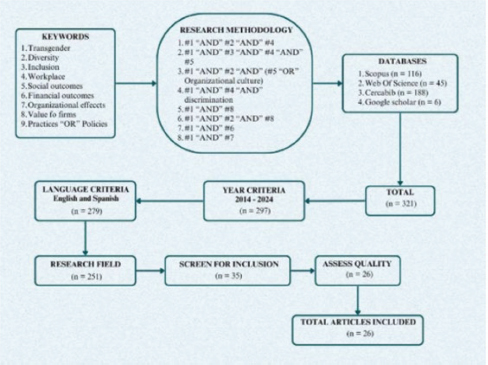
The planning phase involves formulating the problem through the development of research questions and creating the review protocol. The latter consists of establishing inclusion criteria and screening procedures. The main research question aims to assess the social and economic impact of transgender inclusion in organizations. The inclusion criteria encompass various aspects such as the selection of databases, publication date range, language preferences, research areas, operators, and keywords.
The selected databases for this study include Scopus and Web of Science. The primary languages considered are English and Spanish. The publications included in the research focus on business, economics, management, social sciences, psychology, and public administration. The literature analyzed spans from 2014 to 2024, due to the shift in social awareness towards the LGBT community, specifically the transgender community (Singh, 2023). The keywords used in this research include “transgender”, “inclusion”, “diversity”, “workplace”, “practices”, “policies”, “social outcomes”, “financial outcomes”, “organizational effects”, and “value of firms”. Boolean operators such as “AND” and “OR” are combined with the keywords to refine search queries and join similar concepts to identify relevant articles.
The next stage, conducting the review, involves a systematic approach consisting of five steps: searching the literature, screening for inclusion, assessing quality, extracting data, and analysing and synthesising the data (Xiao and Watson, 2019). The initial step, searching the literature, involves collecting relevant literature based on the criteria specified in the review protocol. As stated in Figure 1, by combining the specified keywords and the Boolean operators across the databases mentioned above, the study yields an initial pool of 321 articles. The screening process progressively narrows down the literature. Initially, articles are filtered based on the year of publication between 2014 and 2024 (n = 297), followed by English and Spanish languages (n = 279), and finally by the research fields of business, economics, management, social sciences, psychology, and public administration (n = 251). The next step is inclusion screening, which involves an examination of abstracts to determine if the articles address the research questions mentioned above (Xiao and Watson, 2019). After reviewing the abstracts of the 251 articles left after the filtering, the study resulted in 35 articles retained. Subsequently, the quality assessment is initiated, and the selected articles undergo full-text review, with a final selection of 26 publications. The first author performed the selection of articles and the initial proposal on the social and economic factors related to trans workers’ inclusion, while the second author reviewed the selection and the classification of the factors. Any discrepancies regarding the inclusion of papers and classification of factors were discussed until full agreement was reached among the authors.
4. Results
4.1 Description of the studies
Table 1 provides an overview of the final selection of the literature and indicates the metadata as well as the methods used, samples, and main findings for each study, classified by social and economic levels. In this review, a total of 26 articles from 22 different journals were selected based on the criteria explained in the methodology. The resulting distribution of the topic categories and associated journals in the final sample are displayed using a double pie chart in Figure 2.
Table 1. Selected literature on the social and economic outcomes of trans workers inclusion in organizations
Authors |
Title |
Year |
Journal/Book |
Method |
Sample |
Country |
Social findings |
Economic findings |
Baggio, M. C. |
About the relation between transgender people and the organizations: new subjects for studies on organizational diversity |
2017 |
REGE Revista De Gestão |
Qualitative: semi- structured interviews |
6 transgender workers |
Brazil |
Difficulties of being hired and staying employed. Dismissals after transitioning. Use of “passing” to avoid transphobia. Ignorance and denial from colleagues and firms. Transgender people are left alone to deal with transphobia. |
- |
Boncori, I., Sicca, L. M., & Bizjak, D. |
Transgender and gender non- conforming people (TGNC) in the workplace: direct and invisible discrimination |
2019 |
Palgrave explorations in workplace stigma |
Literature review |
37 articles |
UK and Italy |
TGNC employees face overt discrimination (harassment) and subtle (microaggressions). TGNC have hidden their gender identity due to fear of discrimination, which affects their well-being. TGNC suffer imposed hypersexualization and curiosity for their personal information. A supportive environment can contribute to a more positive workplace and a sense of respect and value |
Diversity can improve organizational performance. |
Brahma, S., Gavriilidis, K., Kallinterakis, V., Verousis, T., & Zhang, M. |
LGBTQ and finance |
2023 |
International Review of Financial Analysis |
Literature review |
78 articles |
USA |
LGBT individuals who have suffered discrimination take more financial risks and have fewer opportunities to obtain a mortgage. |
LGBT policies are related to higher firm performance, reputation, attracting talented employees, and having more financing. |
Cancela, D., Hülsheger, U. R., & Stutterheim, S. E. |
The Role of Support for Transgender and Nonbinary Employees: Perceived Co- Worker and Organizational Support’s Associations With Job Attitudes and Work Behaviour |
2020 |
Psychology of Sexual Orientation and Gender Diversity |
Quantitative online survey |
225 Transgender and non-binary workers |
The Netherlands |
Coworker support is positively correlated with job satisfaction and commitment and negatively related to anxiety and turnover. Organizational support plays a crucial role in shaping the impact of co-worker support on TNB employees' job attitudes. |
Trans individuals suffer harassment, have lower incomes, and have more chances of being fired. |
Chaparro- Pérez, Z., Virgüez, J., Chaparro- Pérez, C., & Cely- Ramírez, J. |
Discriminación por orientación sexual en el lugar de trabajo y sus efectos organizacionales |
2022 |
Revista Venezolana De Gerencia |
Literature review |
47 articles |
Colombia |
Discrimination against LGBTQIA+ individuals leads to a decrease in physical and psychological well-being, suicide and alcoholism tendencies. Implementing policies is essential to improving their rights and the work environment. |
Support policies help to improve profitability, productivity, creativity, and innovation and allow a better allocation of financial resources. |
Chintrakarn, P., Treepongkar una, S., Jiraporn, P., & Lee, S. M. |
Do LGBT-Supportive Corporate Policies Improve Credit Ratings? An Instrumental Variable Analysis |
2018 |
Journal of Business Ethics |
Quantitative: Gallup survey |
7469 observations |
USA |
- |
Firms in states with larger LGBT populations are more likely to adopt LGBT policies. Adopting policies leads to higher credit ratings, competitive advantage, reduced financial costs, better productivity, profitability, and engagement. |
Corlett, S., Stutterheim, S. E., & Whiley, L. A. |
“I only wanted one thing and that was to be who I am now”: Being trans young adult and (re) negotiating vocational identity |
2023 |
Gender, Work and Organization |
Qualitative: semi-structured interviews |
10 Dutch or Belgian Transgender young persons |
The Netherlands and Belgium |
Transgender young adults have to choose between prioritizing education or transitioning. Gender transition can help to develop vocational identity, which affects their career path. |
- |
DeSouza, E., Wesselmann, E. D., & Ispas, D. |
Workplace Discrimination Against Sexual Minorities: Subtle and not-so-subtle |
2017 |
Canadian Journal of The Administrative Sciences |
Literature review |
118 articles |
USA |
Ostracism and microaggressions have negative physical and psychological consequences. LGBT employees don’t fully open up due to ostracism, so they feel disconnected from coworkers and can’t have authentic connections. Trans employees delay the transition to avoid discrimination and evade social gatherings to remain closeted. |
- |
Fletcher, L., & Marvell, R. |
Furthering transgender inclusion in the workplace: advancing a new model of allyship intentions and perceptions |
2023 |
International Journal of Human Resource Management |
Quantitative: online survey |
Study 1: 209 cisgender workers Study 2: 222 trans workers |
UK |
High social dominance orientation (oppression) shows lower trans-allyship intentions. The perceived diversity and inclusion climate helps to mediate the effects of social dominance orientation and trans- allyship. Perceived trans allyship improves work engagement and life satisfaction via psychological safety and authenticity at work. |
- |
Garcia- Johnson, C. P., Otto, K. |
Illegitimate tasks: obstacles to trans equality at work |
2021 |
Gender in Management |
Quantitative: Study 1: Vignette experiment; Study 2: Online Survey |
Study 1: 208 participants Study 2: 345 participants |
Germany |
Supervisors are more likely to assign IT to TGNC. TGNC are more likely to quit and have burnout. TGNC employees perceived the tasks they undertook as less illegitimate. |
- |
Goryunova, E., Schwartz, A. K., & Turesky, E. F. |
Exploring Workplace Experiences of transgender Individuals in the USA |
2021 |
Gender in Management |
Qualitative: semi- structured interviews |
12 transgender and non-conforming individuals |
USA |
Cissexism hurts the workplace experiences and job opportunities of TGNC. Expressing their identity has negative outcomes and are forced to “pass”. Coworkers still have stigmas, ask personal questions and feel more uncomfortable. Supervisors’ support is key, and those who are also part of gender minorities support TGNC individuals more. |
- |
Hossain, M., Atif, M., Ahmed, A., & Mia, L. |
Do LGBT Workplace Diversity Policies Create Value for Firms? |
2019 |
Journal of Business Ethics |
Quantitative: HCR annual report and Bloomberg |
398 firms and 1.592 firm-year observations |
USA |
- |
LGBT policies are positively related to innovation. The increase in innovation from LGBT policies contributes to the firm performance. |
Hur, H. |
The role of inclusive work environment practices in promoting LGBT employee job satisfaction and commitment |
2019 |
Public Money& Management |
Quantitative: survey |
421.748 Federal employees |
USA |
Inclusive work environment positively affects job satisfaction and commitment. |
- |
Kleintop, L. |
When Transgender Employees Come Out: Perceived Support and Cultural Change in the Transition Process |
2019 |
Proceedings Academy of Management |
Literature review |
69 articles |
USA |
Gendered roles decrease the levels of organizational support during the transition process. “Change agents” to help co-workers to understand trans individuals. Importance of including co-workers in training programs to avoid unconscious or conscious discrimination. |
Inclusiveness leads to higher productivity, innovation and creativity. |
Lambert, J. R. |
The impact of gay-friendly recruitment statements and due process employment on a firm’s attractiveness as an employer |
2015 |
Equality, Diversity and Inclusion |
Quantitative: experiment |
119 undergraduate students |
USA |
- |
LGBT diversity statements have a positive impact on organizational attractiveness. Heterosexism is related to more organizational attractiveness and fewer job-pursuit intentions. |
Longarino, D. |
Uncovering: The Economic Benefits of LGBT Workplace Inclusion |
2019 |
Frontiers of Law in China |
Literature review |
146 articles |
China |
LGBT individuals suffer harassment despite inclusion policies, which affects their well-being and career progress. |
Adopting inclusive policies has a positive impact on recruitment, retention, firm performance and loyalty. |
Lourenço, I., Di Marco, D., Branco, M. C., Lopes, A. I., Sarquis, R. W., & Soliman, M. T. |
The Relationship between LGBT Executives and Firms’ Value and Financial Performance |
2021 |
Journal of Risk and Financial Management |
Quantitative |
972 firm– year observations |
USA, UK, Germany, Canada, France, Switzerland, Australia, Hong Kong, Japan, Finland, The Netherlands, and South Korea |
- |
Having LGBT executives has a positive impact on financial performance and firm value. Leverage, GDP per capita and societal tolerance of LGBT individuals also affect firms’ value and performance. The impact of LGBT executives might be diminished in homophobic countries. |
Pichler, S., Blazovich, J. L., Cook, K. A., Huston, J. M., & Strawser, W. R. |
Do LGBT-supportive corporate policies enhance the firm performance? |
2017 |
Human Resource Management |
Quantitative |
26243 firm year observations |
USA |
- |
LGBT policies have a positive impact on firm value, productivity and profitability. |
Ruggs, E. N., Martinez, L. R., Hebl, M. R., & Law, C. L. |
Workplace “Trans”- Actions: How Organizations, Coworkers, and Individual Openness Influence Perceived Gender Identity Discrimination |
2015 |
Psychology of Sexual Orientation and Gender Diversity |
Quantitative: paper and online survey |
118 transgender employees |
USA |
Trans women perceived more discrimination than trans men. Organizational policies and supportive coworkers' reactions predict less perceived discrimination. Being open about trans status doesn’t predict lower perceived discrimination. External sources of support may be instrumental in creating a climate of supportiveness. |
- |
Sabharwal, M., Levine, H., D’Agostino, M. J., & Nguyen, T. |
Inclusive work practices: turnover intentions among LGBT employees of the US federal government |
2018 |
American Review of Public Administration |
Quantitative: survey |
421.748 employees from the 2015 FEVS |
USA |
LGBT employees have higher turnover intentions, but inclusive practices reduce it, especially empowerment policies. |
LGBT employees who perceive their work environment as fair are less likely to turnover. |
Shan, L., Fu, S., & Zheng, L. |
Corporate Sexual equality and Firm Performance |
2017 |
Strategic Management Journal |
Quantitative: longitudinal dataset |
1.283 firm- year observations |
USA |
- |
Firms with more CSE policies have higher stock returns, market valuation, and productivity, a better image and attract more talent. CSE and firm performance are affectedby the labor market and consumer preferences. |
Shannon, M. |
The labour market outcomes of transgender individuals |
2021 |
Labour Economics |
Quantitative: survey |
27.715 trans individuals |
USA |
- |
Trans individuals have lower income, higher poverty and higher unemployment than cisgender individuals. Within transgender people, results differ between female and male at birth. |
Singh, V. |
Third eye: Unravelling the past, present, and future of the trans-gender workforce |
2023 |
Business and Society Review |
Bibliometric analysis |
116 articles |
India |
The transition process implies a change in social relationship dynamics. Firm support can help to improve job attitudes and lower discrimination. |
Transphobic firms impactemployee productivity, job satisfaction, retention, commitment, and physiological well- being. |
Stempkowski, C., Cabral, P. M. F., Da Silva Freitas, J. C., Martins, B. V., & Fonseca, M. J. |
Transforming organizations: experiences of leaders and transgender professionals in the workplace |
2023 |
GeSec |
Qualitative: semi-structured interview |
9 trans women and 6 trans men |
Brazil |
Lack of preparedness of firms to accommodate transgender individuals. Skills questioned due to their gender. |
Trans professionals face difficulties finding employment due to their appearance, which affects the positions they can occupy. |
Suárez, M. I., Márquez- Velarde, G., Glass, C., & Miller, G. H. |
Cis-normativity at work: exploring discrimination against the US trans workers |
2020 |
Gender in Management |
Quantitative: survey |
24.391 trans- identified individuals |
USA |
Being a non-white transgender individual increases the likelihood of experiencing discrimination. For trans women, social class, race, low income and low education are risk factors for discrimination. For trans men, higher education reduces discrimination, but higher income does not. The risk of discrimination related to social class is more nuanced. |
Trans men have lower income and education than trans women. |
Zeng, Y., Katsumata, S., Zhang, Q., & Li, X. |
Organizational inclusion and sustainable development: An Empirical evidence from the context of Eastern culture |
2024 |
Sustainable development |
Quantitative: survey |
1456 companies |
Japan |
Managers are essential in promoting LGBT inclusion through training programs or policies that align with the goals of the firm. |
Organizational inclusion positively influences the corporate market, reputation, loyalty, stakeholders, and environmental performance. |
Figure 2. Selected literature by journal and field
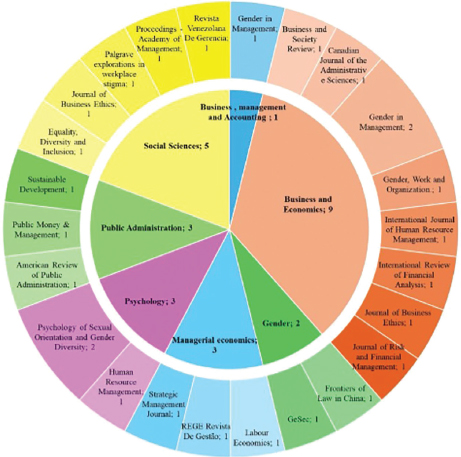
The outer ring in Figure 2 indicates the journals along with the corresponding count of articles from each. Conversely, the inner ring represents the distribution of articles across seven different research areas included in the review. Most of the articles in this literature selection fall under the Business and Economics category, comprising nine articles. In addition, there are five articles in Social Sciences, three in Public Administration, three in Psychology, three in Managerial Economics, two in Gender, and one in Business, Management and Accounting.
In terms of the methodologies used in the sample of articles, sixteen studies employed a quantitative approach, which involved collecting numerical data through subsequent statistical analysis to identify trends or correlations. Common data collection techniques included experiments, questionnaires, and published data observations. In contrast, the remaining ten studies employed a qualitative approach, primarily relying on two data collection techniques. These methods encompassed semi-structured interviews, characterized by a predetermined set of questions, that allow going in-depth into some of the topics, and review of existing literature.
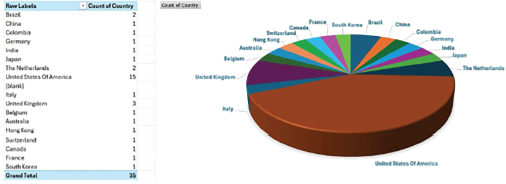
An analysis of the geographical origins of the data was conducted to determine which countries were more engaged in the discourse on transgender inclusion. The data were obtained from studies conducted in 35 countries, with the United States in a leading position, followed by the United Kingdom, the Netherlands, Brazil, Australia, Italy, and Spain (Chaparro-Pérez et al., 2023).
4.2 Analysis of the inclusion of trans workers at social level
4.2.1 Discrimination in the workplace
Transgender individuals, as a minority group within society, often suffer significant levels of discrimination in the workplace (Boncori et al., 2019). This discrimination can be overt, such as through harassment, denial of promotions, or the assignment of illegitimate tasks. It can also be subtle, manifesting as ostracism, microaggressions, microinvalidations, or microinsults (Chaparro-Pérez et al., 2023; DeSouza et al., 2017; García Johnson and Otto, 2022). For instance, in the study by García Johnson and Otto (2022), the authors suggest that transgender individuals are often assigned illegitimate tasks, even though these are not within the scope of their jobs. These tasks are unnecessary or unreasonable, and transgender individuals are discriminated against by their cisgender counterparts, which leads to higher levels of burnout. In addition, some specific situations of subtle discrimination include not replying to emails or treating someone differently because of their appearance (Chaparro-Pérez et al., 2023; DeSouza et al., 2017). Such discriminatory behaviours are due to cissexist bias, with several consequences for transgender employees. On a personal level, discrimination worsens the physical and psychological health of transgender individuals, leading to higher levels of burnout, as well as depressive and anxious tendencies (García Johnson and Otto, 2022; Ruggs et al., 2015). In addition, discrimination has economic consequences, resulting in higher unemployment rates and lower income (Boncori et al., 2019). Additionally, discrimination negatively impacts employees’ performance, resulting in lower productivity and participation, as well as higher turnover intentions (Goryunova et al., 2022; Sabharwal et al., 2019).
Figure 3. Selected literature by country
Despite these adversities, certain factors, such as the degree of “passability” and the transition process, help to reduce the level of discrimination within the organization. “Passability” refers to how closely transgender individuals align physically with traditional social gender norms. Higher levels of “passability” are associated with fewer obstacles and less discrimination, as well as lower probabilities of being ignored or misunderstood (Baggio, 2017; Stempkowski et al., 2023). Studies suggest that the more advanced individuals are in their transition process, the less discrimination they experience, and the higher their self-confidence and efficacy (Corlett et al., 2023b).
4.2.2 Segregation among transgender individuals
Transgender employees often experience discrimination from colleagues. However, discrimination levels vary according to gender identity (transgender men or transgender women), race, age, and socioeconomic status (DeSouza et al., 2017). Principally, transgender women (assigned male at birth), experience more discrimination than transgender men (assigned female at birth). This is because transgender women face a double burden of discrimination: transphobia plus the sexism that all women experience. Transgender men also experience discrimination, but it tends to be less severe because they are perceived as cisgender men by their counterparts, and thus have higher “passability” (Shannon, 2022).
Additionally, transgender women are more likely to be unemployed, live in poverty, and have lower income and educational levels compared to their female-to-male counterparts, which enhances discrimination. Moreover, transgender men generally have higher academic levels, which reduces discrimination (DeSouza et al., 2017; Suárez et al., 2022). Discrimination levels are also influenced by race. For instance, Black and Indigenous transgender women experience more discrimination than white transgender women. Although the situation is similar for transgender men, racist biases have fewer effects on them, as gender discrimination between men and women still plays a significant role in society (DeSouza et al., 2017; Suárez et al., 2022).
4.2.3 The Role of co-workers and leaders
A supportive work environment is essential, as it affects the employees' attitudes and productivity. The attitudes and behaviours of co-workers and leaders are crucial in determining the level of discrimination that transgender individuals might face (Boncori et al., 2019). A supportive working environment that fosters open communication can significantly reduce discriminatory attitudes, improve job and life satisfaction, and commitment of transgender employees while also reducing their anxiety and burnout levels (Cancela et al., 2020). However, the reality is that organizations usually provide minimal support. Leaders are often unprepared to manage diversity, and co-workers are typically uninformed about transgender issues, forcing transgender employees to educate their colleagues (Baggio, 2017; Stempkowski et al., 2023). In addition, some co-workers might be transphobic and have high levels of social dominance, meaning that they perceive their gender to be superior. This resistance against transgender individuals enhances discrimination and reduces the perception of co-workers as allies, reducing authenticity (Fletcher and Marvell, 2023; Kleintop, 2019). In that sense, several studies recommend prioritizing the creation of training programs for co-workers to develop a supportive environment. This training can help to humanize transgender employees and improve the co-workers’ attitudes towards their transgender colleagues (Boncori et al., 2019; Cancela et al., 2020; Kleintop, 2019; Stempkowski et al., 2023).
4.2.4 Implementation of Policies
Fostering an inclusive environment in the workplace is essential for improving the situation of transgender employees. Moreover, the presence of LGBT-supportive policies is also important, as they can help to reduce perceived discrimination, enhance employee satisfaction, and improve the overall firm environment (Brahma et al., 2023; Ruggs et al., 2015). These policies can be voluntarily implemented by the organization, or mandated by the state (e. g. Spain’s Trans Law: Ley 4/2023, de 28 de febrero, para la igualdad real y efectiva de las personas trans y para la garantía de los derechos de las personas LGTBI). Regarding organizational policies, Hur (2020) and Sabharwal and colleagues (2019) note that policies fostering a fair, open, supportive, and empowering environment are more effective in reducing discrimination. On the other hand, regarding state policies, Brahma et al. (2023) suggest that companies in states with LGBT-supportive policies are more likely to foster inclusivity. However, authors disagree on the effectiveness of these policies. DeSouza et al. (2017) argue that state policies are more effective than organizational ones, whereas Suárez et al. (2022) and Boncori et al. (2019), contend that even state policies are insufficient, leaving transgender individuals vulnerable.
4.3 Analysis of the inclusion of trans workers at economic level
Although this field of study is in its early stages, research suggests that LGBT individuals and LGBT-supportive policies contribute positively to financial performance and firm value (Brahma et al., 2023; Chintrakarn et al., 2020; Hossain et al., 2020; Lourenço et al., 2021; Pichler et al., 2018; Shan et al., 2017).
4.3.1 Financial performance
Lourenço et al. (2021) conducted a simultaneous estimation and found a positive correlation between financial performance, measured using Return On Assets, the firm value, and the existence of LGBT executives. These executives not only enhance firm value but also attract well-qualified employees, thereby improving commitment and reputation. Additionally, this relationship is more pronounced in countries with a higher GDP per capita and more tolerant attitudes towards LGBT individuals. Similarly, Brahma and colleagues (2023) noted that LGBT-friendly policies contribute to economic development and increased GDP per capita in those more supportive regions, and firms operating in LGBT-friendly states are more likely to adopt such policies. Furthermore, Shan and colleagues (2017), through a regression analysis, established that firms exhibiting high levels of corporate sexual equality (CSE), through offering equal opportunities to employees, experience higher stock returns, productivity, and market value. Therefore, including CSE policies can enhance firms’ performance and competitiveness, mainly due to better talent attraction and employee productivity. However, contradicting the statement of Lourenço and colleagues (2021), this study determined that regional differences in the acceptability of LGBT individuals do not significantly impact firm value.
4.3.2 Competitive advantage
Different studies conclude that adopting LGBT-supportive policies leads to more favourable credit ratings in financial markets, increased competitive advantage, lower financing costs, and an improved firm reputation (Brahma et al., 2023; Chintrakarn et al., 2020; Lambert, 2015). These studies, as well as Shan et al. (2017), observed that the effectiveness of LGBT-supportive policies does not vary significantly between regions with high or low social acceptance. Longarino (2020) aligned with the findings of the aforementioned authors, adding that diversity-supporting actions can boost demand due to increased consumer engagement with socially responsible firms. On the contrary, discriminatory behaviour against trans individuals results in higher economic costs, such as recruiting expenses, as it affects the morale of employees, which at the same time decreases productivity and, in the end, increases turnover rates (Sabharwal et al., 2019).
4.3.3 Sustainability
Organizational inclusion of LGBT individuals can positively influence not only the corporate market performance but also the environmental performance of the firm (Zeng et al., 2024). Businesses that value diversity in their workforce and are more committed to inclusion are more likely to prioritize social responsibility and ethical behaviours, including environmental sustainability (Zeng et al., 2024).
4.3.4 Innovation
LGBT policies have a significant positive impact on firm innovation, as reflected in a higher number of patents and trademarks (Hossain et al., 2020). The authors mention that treating individuals in the workforce equally can provide a favourable environment that ultimately adds value to the firm. In relation to this effect, firms with LGBT policies and active research and development activities have a greater increase in firm value, productivity, and profitability compared to those without such policies. These positive outcomes tend to grow after the adoption of these policies. However, firms with LGBT policies but without research and development activities experience decreased profitability (Pichler et al., 2018).
5. Discussion
This study has explored the social and economic outcomes of trans workers’ inclusion in organizations. As the results of this study indicate, by promoting inclusive environments, organizations obtain the moral benefits of equality, respect, and fairness for all individuals. In addition, the inclusion of trans workers also contributes to financial benefits, becoming a win-win for workers, organizations, and society.
In terms of the social impacts of including transgender individuals in the workforce, this review found that trans workers suffer both overt and subtle discrimination, negatively affecting their mental health and other outcomes. The level of discrimination varies according to gender identity, race, and socioeconomic status, with transgender women facing more significant challenges. However, supportive co-workers and policies can help reduce discrimination and enhance the experience of transgender employees. Regarding the economic factors, results suggest that inclusion could lead to increased financial performance, productivity, talent retention, and even sustainability and innovation. Additionally, the implementation of supportive policies is associated with lower turnover intentions.
5.1 Theoretical and practical contributions
This study makes several significant theoretical contributions to the field of trans inclusion within organizations. The study found that transgender individuals still face discrimination, but it varies based on their gender identities. It highlights the importance of supportive co-workers and inclusive policies to improve attitudes towards transgender employees and enhance their work experiences. Specifically, the analysis shows that while some studies consider organizational policies to have a stronger impact, others conclude that state legislation plays a more relevant role in inclusion. Furthermore, this analysis helps to reduce the gap in the existing literature and expand the knowledge and outcomes of implementing inclusion practices for trans workers in modern organizations.
In terms of practical contributions, first, this study explores a proactive approach for organizations to promote inclusion for trans workers. Studies suggest that the inclusion of trans workers can lead the way in innovative approaches to solution design, given their experiences in overcoming barriers. This contributes not only to social benefits (i. e. reputation and well-being) but also to economic benefits (i. e. competitive advantage and financial performance). Organizations can take this approach by (a) promoting trans workers who can act as role models, as seeing someone they aspire to be like can motivate and attract trans workers as well as normalize transgender identity inside the organizations (Anzani et al., 2025); and (b) avoiding heteronormative systems such as binary bathrooms or gendered dress-codes (Corlett et al., 2023a). Secondly, studying the vulnerable workforce benefits organizations by offering insights into practices that increase organizational inclusion and social justice (Restubog et al., 2023). For that reason, supervisors and co-workers should also be trained in the inclusion of trans workers. We expect that addressing the social and economic outcomes of including trans workers will help organizations, as systems, and their members—both teams and the trans collective—break down barriers and make trans workers’ lives more fruitful and dignified.
5.2 Limitations and future research
This study has some limitations. First, the sample size was too small given the novelty of the area; more studies are needed to better understand the implications of transgender inclusion. Second, most of the papers reviewed were based on studies conducted in Western countries (i. e. the UK and the US). Given the impact of the context on the perception of barriers and the role played by legislation (e. g., European Directive), this research area would benefit from studies conducted in diverse contexts (e. g., cultures). The impact of LGBT inclusion initiatives in different regions needs further research. We expect that this analysis acts as a seed for future studies aiming to improve the inclusion of trans workers and their dignity in organizations.
Funding
This work was supported by the Ministry of Science and Innovation in Spain under the grant number I+D PID2023-152279OB-I00, in which the author Patricia Elgoibar, PhD, participates.
References
Anzani, A., Pavanello Decaro, S., Paganin, G., & Prunas, A. (2025). Navigating Role Models: Shaping Masculine Identity Among Transmasculine and Cisgender Emerging Adults. Sexuality Research and Social Policy, 22(2), 1071-1082. https://doi.org/10.1007/s13178-024-01029-9
Arenas, A., Di Marco, D., Munduate, L., & Euwema, M. C. (Eds.). (2017). Shaping inclusive workplaces through social dialogue. Cham: Springer International Publishing.
Baggio, M. C. (2017). About the relation between transgender people and the organizations: new subjects for studies on organizational diversity. REGE - Revista de Gestão, 24(4), 360–370. https://doi.org/10.1016/j.rege.2017.02.001
Biosca, A., & Wilk, K. (2025). Idiosyncratic deals as mechanisms of inclusion: transgender workers’ informal negotiation practices in the Spanish workplace. [Unpublished master's thesis]. University of Barcelona.
Boncori, I., Sicca, L. M., & Bizjak, D. (2019). Transgender and Gender Non-conforming People in the Workplace: Direct and Invisible Discrimination (pp. 141–160). https://doi.org/10.1007/978-3-030-11644-6_7
Brahma, S., Gavriilidis, K., Kallinterakis, V., Verousis, T., & Zhang, M. (2023). LGBTQ and finance. In International Review of Financial Analysis (Vol. 86). Elsevier Inc. https://doi.org/10.1016/j.irfa.2023.102547
Cancela, D., Hulsheger, U. R., & Stutterheim, S. E. (2020). The role of support for transgender and nonbinary employees: Perceived co-worker and organizational support’s associations with job attitudes and work behavior. Psychology of Sexual Orientation and Gender Diversity. https://doi.org/10.1037/sgd0000453
Chaparro-Pérez, Z. Y., Virgüez, J. F., Chaparro-Pérez, C. J., & Cely-Ramírez, J. A. (2023). Discrimination based on sexual orientation in the workplace and its organizational effects. Revista Venezolana de Gerencia, 28(101), 29–46. https://doi.org/10.52080/rvgluz.28.101.3
Chintrakarn, P., Treepongkaruna, S., Jiraporn, P., & Lee, S. M. (2020). Do LGBT- Supportive Corporate Policies Improve Credit Ratings? An Instrumental-Variable Analysis. Journal of Business Ethics, 162(1), 31–45. https://doi.org/10.1007/s10551-018-4009-9
Corlett, S., Di Marco, D., Munduate, L., & Arenas, A. (2023a). Manifestations and reinforcement of heteronormativity in the workplace: a systematic scoping review. Journal of Homosexuality, 70(12), 2714-2740. https://doi.org/10.1080/00918369.2022.2074334
Corlett, S., Stutterheim, S. E., & Whiley, L. A. (2023b). “I only wanted one thing and that was to be who I am now”: Being a trans young adult and (re)negotiating vocational identity. Gender, Work and Organization. https://doi.org/10.1111/gwao.12976
DeSouza, E. R., Wesselmann, E. D., & Ispas, D. (2017). Workplace Discrimination against Sexual Minorities: Subtle and not-so-subtle. Canadian Journal of Administrative Sciences, 34(2), 121–132. https://doi.org/10.1002/cjas.1438
Dovidio, J. F., Abad-Merino, S., & Tabernero, C. (2017). General concepts about inclusion in organizations: a psychological approach to understanding diversity and inclusion in organizations. In Shaping inclusive workplaces through social dialogue (pp. 23-31). Cham: Springer International Publishing.
Fletcher, L., & Marvell, R. (2023). Furthering transgender inclusion in the workplace: advancing a new model of allyship intentions and perceptions. International Journal of Human Resource Management, 34(9), 1726–1756. https://doi.org/10.1080/09585192.2021.2023895
García Johnson, C. P., & Otto, K. (2022). Illegitimate tasks: obstacles to trans equality at work. Gender in Management, 37(6), 763–781. https://doi.org/10.1108/GM-04-2020-0118
Goryunova, E., Schwartz, A. K., & Turesky, E. F. (2022). Exploring workplace experiences of transgender individuals in the USA. Gender in Management, 37(6), 732–750. https://doi.org/10.1108/GM-02-2020-0055
Hancock, B., Ockleford, E., & Windridge, K. (2001). An introduction to qualitative research. London: Trent focus group.
Harrell, M. C., & Bradley, M. A. (2009). Data Collection Methods: Semi-Structured Interviews and Focus Groups. Rand Corporation.
Herring, C. (2009). Does diversity pay?: Race, gender, and the business case for diversity. American sociological review, 74(2), 208-224. https://doi.org/10.1177/000312240907400203
Hossain, M., Atif, M., Ahmed, A., & Mia, L. (2020). Do LGBT Workplace Diversity Policies Create Value for Firms? Journal of Business Ethics, 167(4), 775–791. https://doi.org/10.1007/s10551-019-04158-z
Hur, H. (2020). The role of inclusive work environment practices in promoting LGBT employee job satisfaction and commitment. Public Money and Management, 40(6), 426–436. https://doi.org/10.1080/09540962.2019.1681640
Kleintop, L. K. (2019). When Transgender Employees Come Out: Perceived Support and Cultural Change in the Transition Process. Journal of Business Diversity, 19(5), 55-67. https://doi.org/10.33423/jbd.v19i5.2645
Lambert, J. R. (2015). The impact of gay-friendly recruitment statements and due process employment on a firms attractiveness as an employer. Equality, Diversity and Inclusion, 34(6), 510–526. https://doi.org/10.1108/EDI-03-2013-0012
Longarino, D. (2020). Uncovering: The economic benefits of LGBT workplace inclusion. Frontiers of Law in China, 14(4), 500–532. https://doi.org/10.3868/s050-008-019-0024-5
Lourenço, I. C., Marco, D. Di, Castelo Branco, M., Lopes, A. I., Sarquis, R. W., Soliman, M. T., Gherghina, C., & Malliaris, A. G. (2021). Risk and Financial Management. The Relationship between LGBT Executives and Firms’ Value and Financial Performance. https://doi.org/10.3390/jrfm
Paperpile. (n. d.). Can a blog be a credible source? [Update 2024]. https://paperpile.com/g/blog-credible-source/
Pichler, S., Blazovich, J. L., Cook, K. A., Huston, J. M., & Strawser, W. R. (2018). Do LGBT-supportive corporate policies enhance firm performance? Human Resource Management, 57(1), 263–278. https://doi.org/10.1002/hrm.21831
Restubog, S. L. D., Schilpzand, P., Lyons, B., Midel Deen, C., & He, Y. (2023). The vulnerable workforce: A call for research. Journal of Management, 49(7), 2199-2207. https://doi.org/10.1177/01492063231177446
Ruggs, E. N., Hebl, M. R., Martinez, L. R., & Law, C. L. (2015). Workplace ‘trans’- actions: How organizations, coworkers, and individual openness influence perceived gender identity discrimination. Psychology of Sexual Orientation and Gender Diversity, 2(4), 404–412. https://doi.org/10.1037/sgd0000112
Sabharwal, M., Levine, H., D’Agostino, M., & Nguyen, T. (2019). Inclusive Work Practices: Turnover Intentions Among LGBT Employees of the U. S. Federal Government. American Review of Public Administration, 49(4), 482–494. https://doi.org/10.1177/0275074018817376
Shan, L., Fu, S., & Zheng, L. (2017). Corporate sexual equality and firm performance. Strategic Management Journal, 38(9), 1812–1826. https://doi.org/10.1002/smj.2624
Shannon, M. (2022). The labour market outcomes of transgender individuals. Labour. Economics, 77. https://doi.org/10.1016/j.labeco.2021.102006
Shijaku, E., & Elgoibar, P. (2023). A rainbow of colors: The value of embeddedness for understanding actor entrepreneurship in organizational LGBTQ+ communities. European Management Journal, 41(4), 648-660. https://doi.org/10.1016/j.emj.2022.12.003
Singh, V. (2023). Third eye: Unraveling the past, present, and future of the transgender workforce. Business and Society Review, 128(3), 549–567. https://doi.org/10.1111/basr.12326
Stempkowski, C., Cabral, P. M. F., Freitas Junior, J. C. da S., Martins, B. V., & Fonseca, M. J. (2023). Transforming organizations: experiences of leaders and transgender professionals in the workplace. Revista de Gestão e Secretariado (Management and Administrative Professional Review), 14(11), 20345–20362. https://doi.org/10.7769/gesec.v14i11.3189
Suárez, M. I., Marquez-Velarde, G., Glass, C., & Miller, G. H. (2022). Cis-normativity at work: exploring discrimination against US trans workers. Gender in Management, 37(6), 716–731. https://doi.org/10.1108/GM-06-2020-0201
Van Knippenberg, D., & Hoever, I. J. (2017). Team diversity and team creativity. In R. Reiter-Palmon (Ed.), Team creativity and innovation, pp. 41-60. Oxford University Press.
Verdejo, C., Tapia-Benavente, L., Schuller-Martínez, B., Vergara-Merino, L., Vargas-Peirano, M., & Silva-Dreyer, A. M. (2021). What you need to know about scoping reviews. Medwave, 21(02). https://doi.org/10.5867/medwave.2021.02.8144
Xiao, Y., & Watson, M. (2019). Guidance on Conducting a Systematic Literature Review. In Journal of Planning Education and Research (Vol. 39, Issue 1, pp. 93–112). SAGE Publications Inc. https://doi.org/10.1177/0739456X17723971
Zeng, Y., Katsumata, S., Zhang, Q., & Li, X. (2024). Organizational inclusion and sustainable development: An empirical evidence from the context of Eastern culture. Sustainable Development. https://doi.org/10.1002/sd.2942